
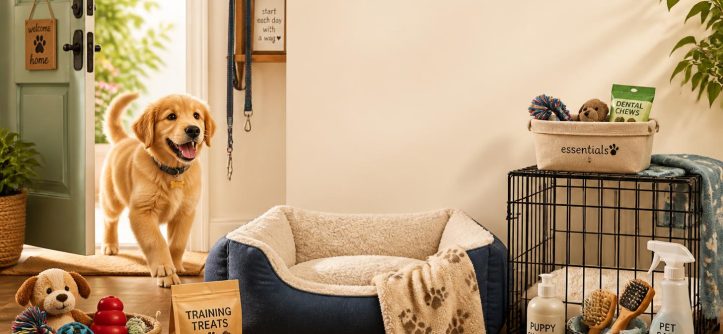
Bringing a new dog home is an exciting experience, but it helps to have the basic supplies ready before your new companion arrives. Food, bowls, identification, walking equipment, toys, bedding, grooming supplies, cleaning products, and safety items can make the first days much easier.
Current puppy checklists from veterinary and pet-care sources commonly recommend preparing essentials such as food and water bowls, a collar and leash, identification, toys, a crate or gate, bedding, cleaning supplies, and grooming products before the dog arrives.
You don’t need to buy every pet product available. Focus on items that match your dog’s size, age, breed, activity level, and lifestyle.
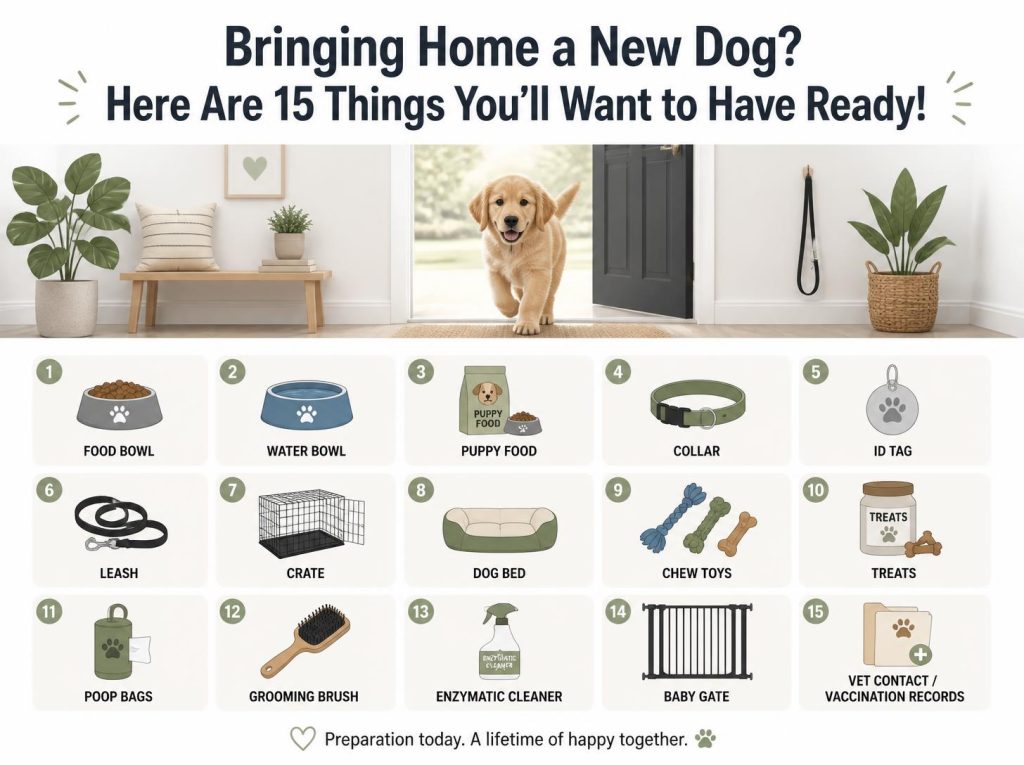
Here are 15 must-have products for new dog owners to consider.
1. Dog Food
Good nutrition is one of the first priorities when bringing home a new dog.
If you’re adopting a puppy, choose food formulated for puppies and appropriate for the dog’s expected size and life stage. If possible, find out what food the puppy has already been eating and discuss any planned changes with your veterinarian.
A sudden change in food can cause digestive problems, so transitions are often best handled gradually with professional guidance.
Before buying, check:
- Life-stage suitability
- Breed or size recommendations
- Feeding instructions
- Ingredient information
- Storage requirements
Your veterinarian can help you choose an appropriate diet for your individual dog.
2. Food and Water Bowls
Every new dog needs dedicated food and water bowls.
Choose bowls that are appropriately sized and easy to clean. Stainless steel and ceramic are popular options, while nonslip designs can help prevent bowls from sliding around during meals.
Fresh drinking water should always be available.
For dogs who travel or go on long walks, a portable water bottle or collapsible bowl can be a useful addition.
3. Collar and ID Tag
A properly fitted collar and identification tag are important items for a new dog.
An ID tag can display useful contact information if your dog becomes separated from you. Check the tag periodically to make sure your information remains current.
The collar should fit securely without being excessively tight. A good rule is to follow the manufacturer’s fitting guidance and regularly check the fit as a puppy grows.
Microchipping is another topic to discuss with your veterinarian, particularly when bringing a new dog into your family.
4. Leash and Harness
A sturdy leash is essential for walks and early training.
Many owners choose to have both a collar and a harness, depending on their dog’s needs and walking habits.
A harness should fit correctly and allow comfortable movement without rubbing or restricting the dog. A fixed-length leash can be useful for everyday walks and training.
Before buying a harness, measure your dog carefully and follow the manufacturer’s sizing chart.
5. Dog Crate or Safe Resting Area
A crate can provide a dedicated resting area and can form part of a structured house-training routine when used appropriately.
The crate should provide enough room for the dog to stand, turn around, and lie down comfortably. Puppies may need a crate with an adjustable divider as they grow.
A crate should be introduced positively and should never be used as a punishment.
If a crate isn’t suitable for your home or dog, a secure pen or designated resting area may be another option.
6. Comfortable Dog Bed
A comfortable bed gives your dog a place to relax during the day and sleep at night.
Consider your dog’s expected adult size, sleeping habits, age, and chewing behavior when choosing a bed.
For puppies, a washable and reasonably durable bed can be particularly practical. Some puppies may chew bedding during the teething stage, so supervision and appropriate alternatives may be needed.
Look for:
- Appropriate size
- Washable materials
- Comfortable filling
- Durable construction
- Easy maintenance
7. Puppy or Dog Toys
Toys provide opportunities for play, interaction, and mental stimulation.
A new dog can benefit from having several types of toys rather than a large collection of identical ones.
Consider:
- Fetch toys
- Chew toys
- Interactive toys
- Puzzle toys
- Soft toys
- Treat-dispensing toys
Always choose toys appropriate for your dog’s size and chewing habits. Inspect them regularly and replace damaged toys. Veterinary guidance recommends avoiding toys that are too small or damaged enough to create a swallowing or choking risk.
For more ideas, you can explore dog products and accessories.
8. Training Treats
Small treats can be useful when teaching basic behaviors and rewarding desirable actions.
Choose treats appropriate for your dog’s age and size. Small pieces can make frequent rewards easier without providing excessive calories.
Pet-care guidance commonly recommends keeping treats to a limited portion of a dog’s daily calorie intake.
You can use treats when teaching:
- Sit
- Stay
- Come
- Leave it
- Walking manners
- Basic household routines
Positive reinforcement can help make early training a rewarding experience.
9. Poop Bags and Waste Supplies
Poop bags are an everyday essential for dog owners.
Keep them somewhere convenient so you’re ready for walks and trips outside. Many owners keep spare rolls near the front door, in the car, or inside a walking bag.
You can find different types of waste bags, including options marketed around leak resistance and reduced environmental impact. Check the product specifications before buying.
10. Pet Stain and Odor Cleaner
New puppies may have accidents while learning where to go, so a suitable cleaning product is worth having before your dog arrives.
An enzymatic pet cleaner can be useful for dealing with urine and other organic stains. PetMD and Petco both include enzymatic cleaning products among recommended puppy supplies.
Keep cleaning products stored safely away from pets and follow the manufacturer’s instructions.
A good cleaning product can be particularly useful during the first few weeks.
11. Dog Grooming Brush or Deshedding Tool
Grooming needs vary considerably between dogs.
A short-haired dog may need a simple brush, while dogs with long, thick, or shedding coats may need more specialized grooming equipment.
Basic grooming supplies can include:
- Brush
- Comb
- Deshedding tool
- Dog shampoo
- Nail clippers
- Grooming wipes
Regular grooming can help you keep track of changes in your dog’s coat and skin while getting your dog accustomed to being handled.
12. Dog Shampoo
A dog-specific shampoo can be useful for keeping your pet clean between professional grooming appointments.
Don’t automatically use human shampoo on your dog. Petco specifically recommends using shampoo formulated for dogs.
Choose a product appropriate for your dog’s coat and follow the directions on the bottle.
If your dog has persistent skin irritation or other skin problems, speak with your veterinarian rather than relying on a cosmetic product.
13. Dog Gate or Playpen
A dog gate can help you manage access to different areas of your home.
It can be useful for puppies who are still learning household rules or for keeping dogs away from areas containing hazards.
A playpen can provide another controlled area for a young dog when appropriate.
Before buying a gate, measure the opening and check the product’s recommended dimensions and installation requirements.
PetMD includes gates, pens, and crates among the supplies that can help with puppy safety and management.
14. Portable Dog Water Bottle
A portable water bottle can be particularly useful for walks, hikes, road trips, and outdoor activities.
Many designs combine a water container with a drinking section, making it easier to offer water when you’re away from home.
When shopping, look at:
- Capacity
- Leak resistance
- Ease of cleaning
- Size
- Portability
- Drinking design
A portable water solution is a small item that can become surprisingly useful once you start taking your dog on regular outings.
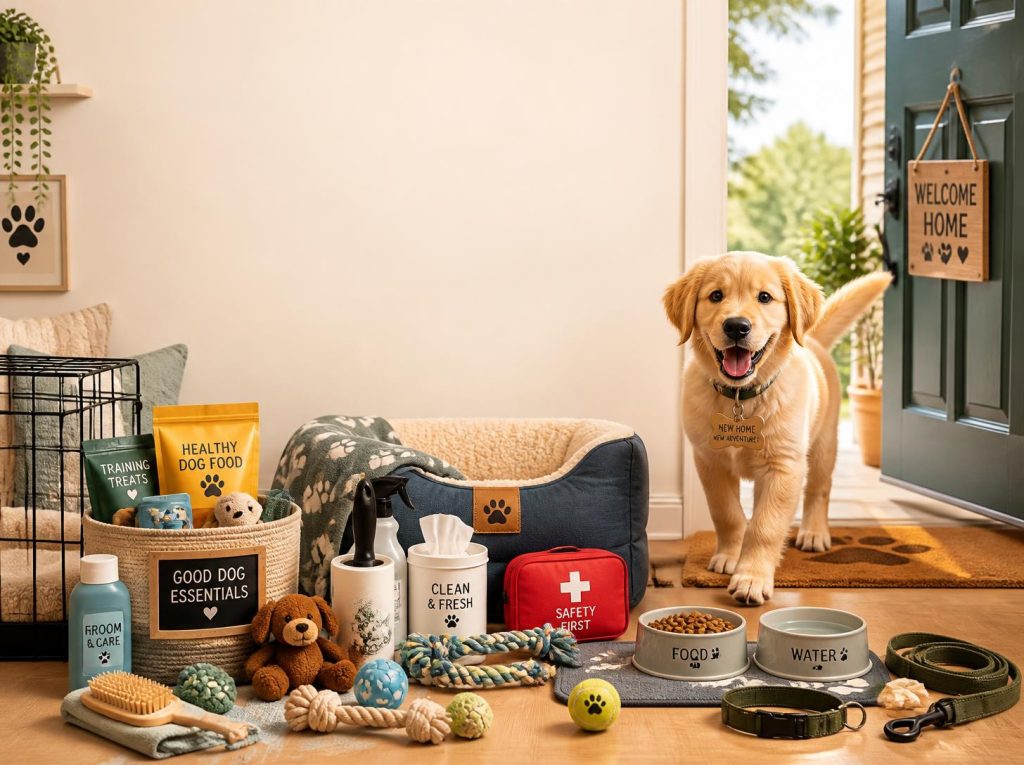
For more pet-care product ideas, check out these dog product recommendations.
15. Dog Travel and Car Accessories
If your dog will travel in your vehicle, a few basic accessories can make trips more manageable.
A protective car seat cover can help protect upholstery from hair, dirt, and moisture. A travel water bottle, waste bags, leash, and suitable restraint system can be useful additions.
Plan your dog’s travel setup around safety first. Follow the vehicle-accessory manufacturer’s instructions and local requirements.
For longer trips, consider bringing water, food, medications prescribed for your dog, waste supplies, and familiar comfort items.
How to Prioritize Your Dog Shopping List
You don’t need to purchase all 15 products on the same day.
Start with the basics:
- Appropriate food
- Food and water bowls
- Collar and identification
- Leash or suitable walking equipment
- Safe sleeping area
- A few suitable toys
- Waste supplies
- Cleaning supplies
Then add grooming, travel, training, and enrichment products based on your dog’s needs.
A new puppy may require more safety and house-training equipment, while an adult rescue dog may have different requirements.
What to Check Before Buying
Before purchasing a dog product, consider five simple questions:
Is it the right size?
A product that is too small or too large may be uncomfortable or unsuitable.
Is it appropriate for your dog’s age?
Puppy products and adult-dog products can have different specifications.
Is it suitable for your dog’s behavior?
A powerful chewer may need different toys from a dog that gently plays with soft toys.
Is it easy to clean?
Washable beds, bowls, toys, and accessories can make everyday maintenance easier.
Does it solve a real problem?
You don’t need every new gadget. Focus on products that provide genuine value for your dog’s routine.
Preparing Your Home Before Your Dog Arrives
Buying the right products is just one part of preparing for a new dog.
Pet-care sources recommend puppy-proofing the home and creating a consistent routine. This can help reduce access to hazards and give your new dog predictable daily activities.
Before arrival:
- Put food and water supplies in place
- Prepare a sleeping area
- Set up gates or a safe area
- Remove potentially dangerous objects
- Prepare cleaning supplies
- Organize toys
- Have walking equipment ready
- Keep identification information current
- Arrange a veterinary appointment
A veterinarian can provide advice about vaccinations, parasite prevention, nutrition, and a care plan suited to your dog’s individual needs.
Final Thoughts
Being prepared can make the transition into dog ownership much smoother.
The 15 must-have products for new dog owners covered here include food and water supplies, identification, walking equipment, a crate or safe area, bedding, toys, treats, cleaning products, grooming supplies, gates, travel accessories, and other everyday essentials.
You don’t need the most expensive version of everything. Focus on safe, suitable, practical products that match your dog’s individual needs.
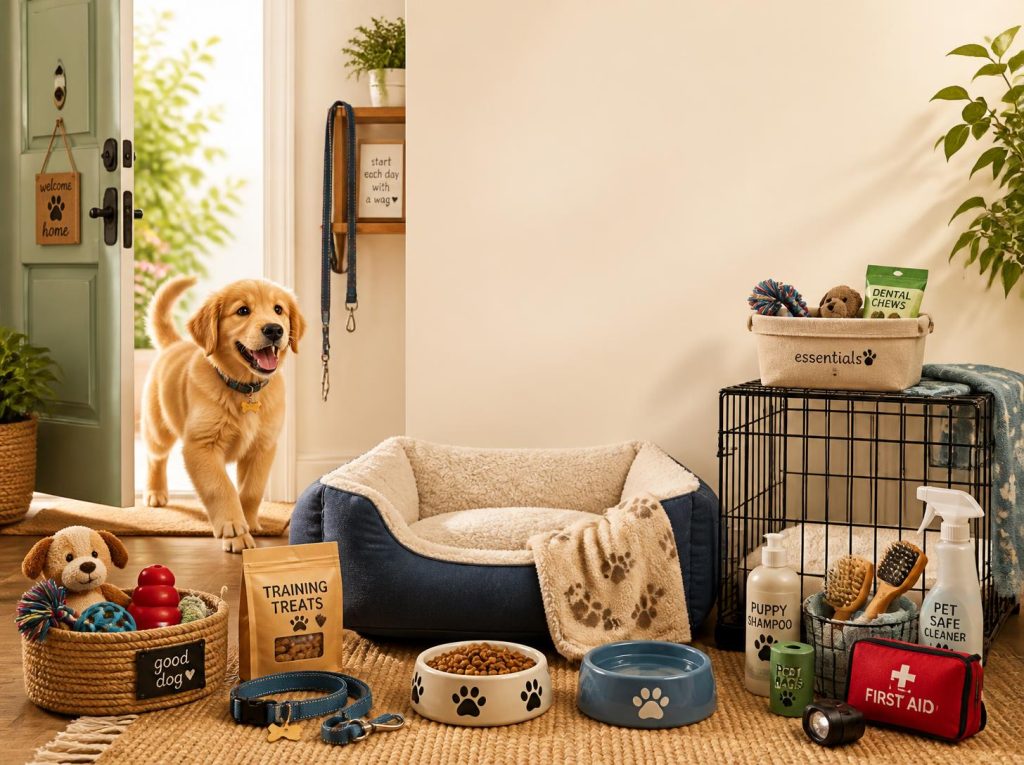
If you’re looking for more ideas for your new companion, explore our dog product recommendations.
With the right preparation, you can spend less time worrying about what you forgot and more time getting to know your new four-legged family member.
Affiliate Disclosure: Some links on this article may be affiliate links. If you make a qualifying purchase through an affiliate link, we may earn a commission at no additional cost to you.
Tags: dog owner checklist, essential dog products, must-have products for new dog owners, new dog owner essentials, new puppy supplies


Leave a Reply